






Replace a Brompton tyre when its condition makes it unfit for further use, rather than relying on mileage alone. Exposed casing or protection layers, a bulge, surface cracks, significant damage or deterioration warrant attention. If you are unsure whether a tyre is structurally sound, stop riding and have it inspected.
A tyre can still hold air while its rubber is deteriorating, and its grip and safety may be compromised. Conversely, a tyre designed with a smooth running surface is not automatically worn out simply because it lacks a deep tread pattern.
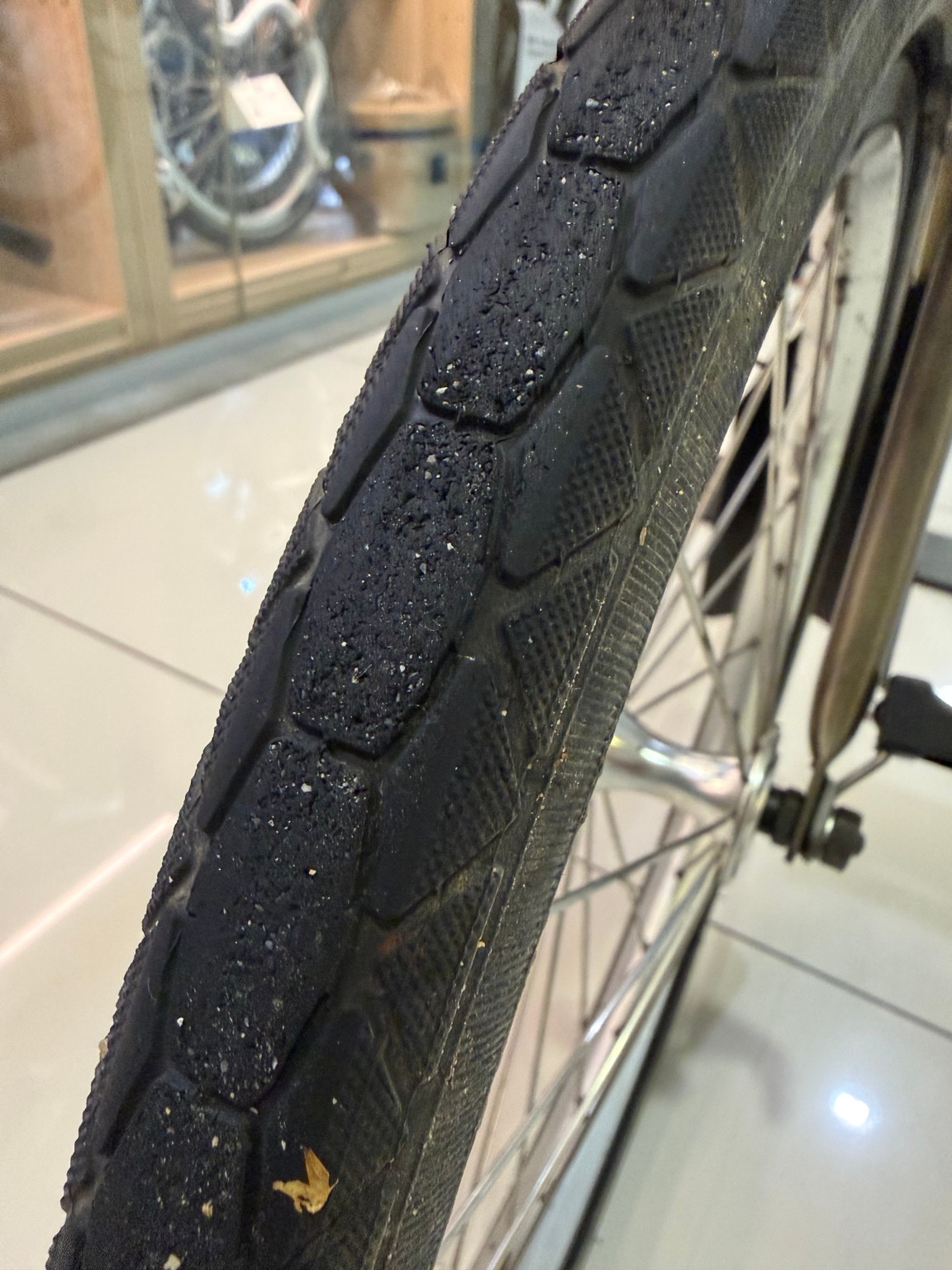
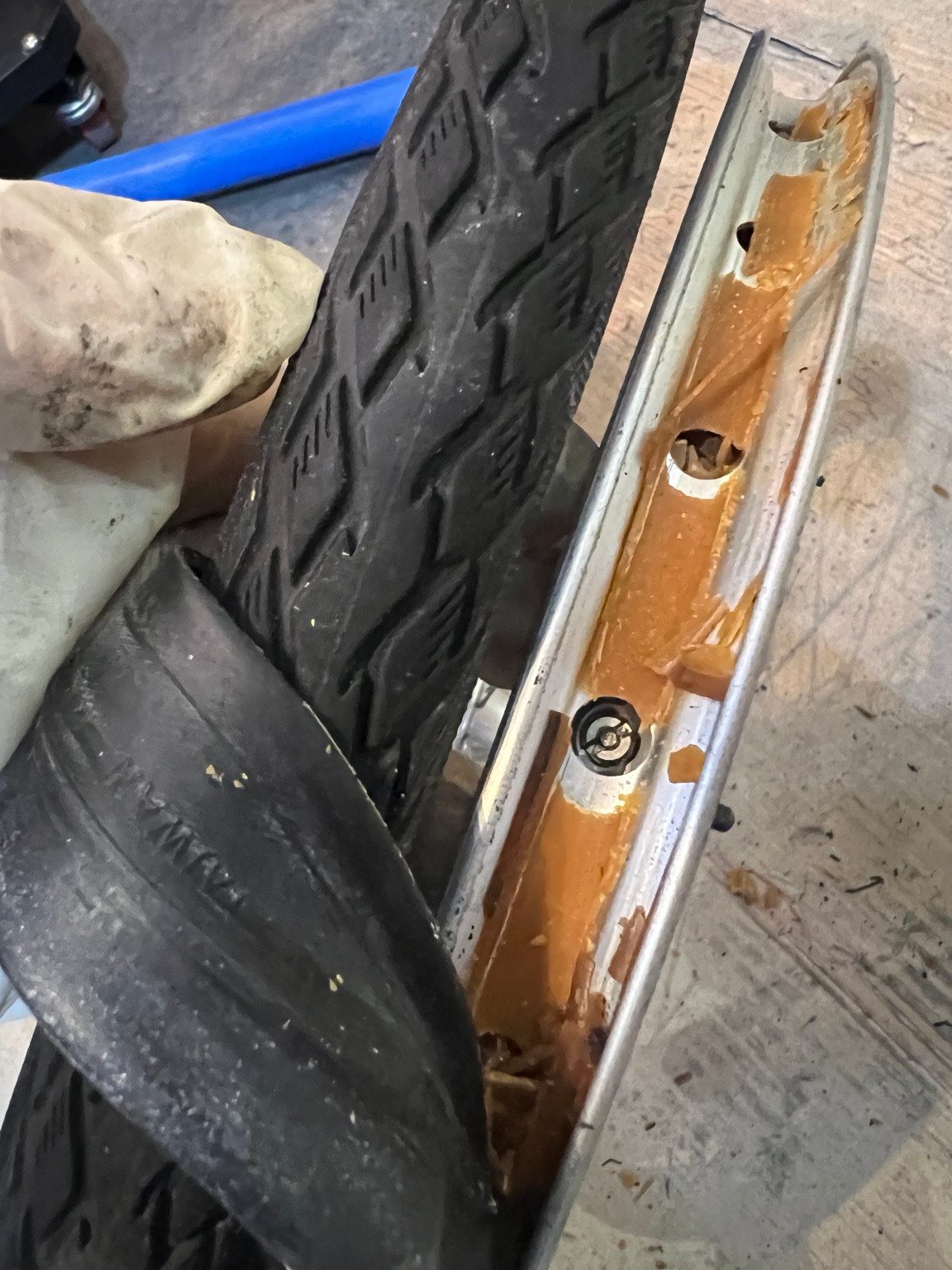
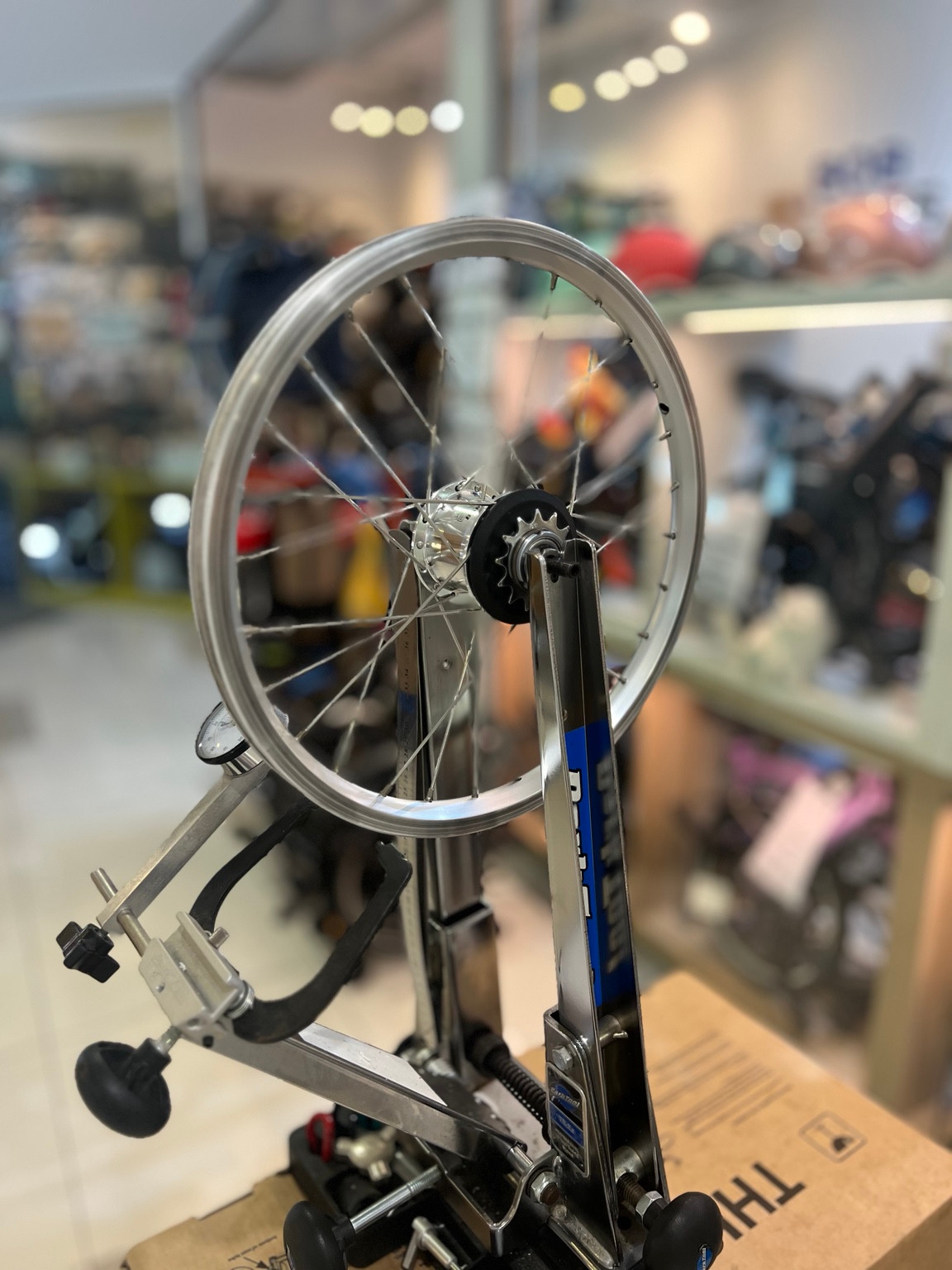
Photo above: An actual tyre photographed at 808 Cycles. Check the running surface and both sidewalls, not only whether the tyre holds air.
Do unused bicycle tyres deteriorate in storage?
Yes. Low mileage does not stop rubber from ageing. Even when a Brompton has not been ridden, its tyre compound can deteriorate, harden and develop cracks. Heat, sunlight, ozone and storage conditions affect how quickly this happens. Hardened rubber can provide less grip, particularly in the wet; cracks and other deterioration can leave a tyre more vulnerable to damage and punctures. Holding air and having plenty of tread are not proof that an old tyre is safe.
At 808 Cycles, we recommend reviewing your tyres for preventive replacement around the 2–3-year mark, especially after prolonged storage. Inspect them before returning a stored bike to the road, and replace deteriorated tyres sooner. This is a practical workshop recommendation, not a universal expiry date: not every tyre fails after two or three years, and condition, use and storage matter.
Michelin explains that bicycle tyres age even when unused. Schwalbe notes that tyres stored cool, dry and dark can last five years or longer. A storage-life statement is not a guarantee that a tyre fitted to a bicycle remains roadworthy. Follow the tyre maker’s guidance and have doubtful tyres inspected.
Look around the whole tyre
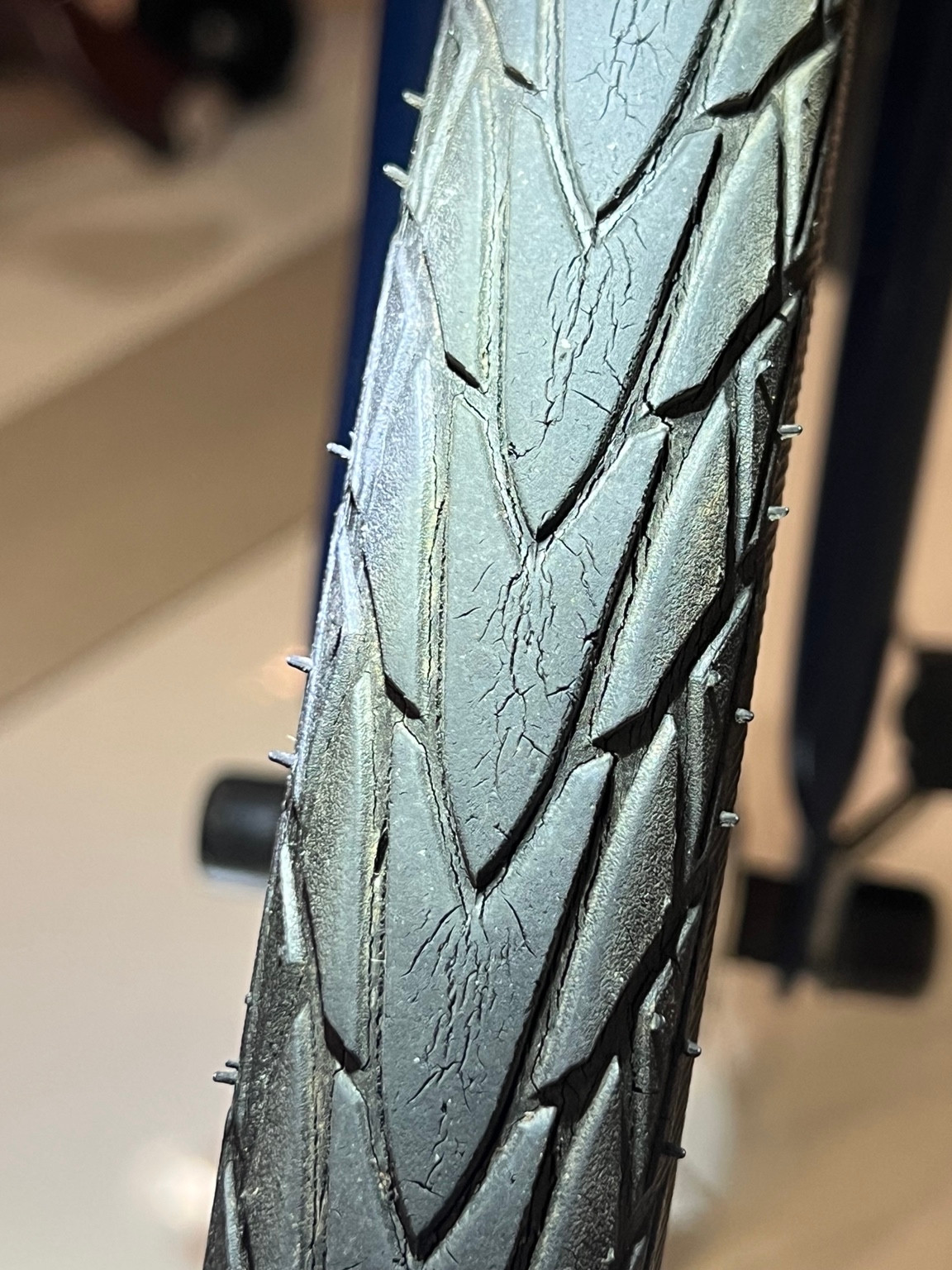
Inspect the running surface and both sidewalls in good light, working around the complete circumference. Check for cuts, cracking, embedded debris, bulges and areas where the underlying structure appears through the rubber. Look near the rim as well as at the centre of the tread.
The photograph above is an example of visible deterioration. A photograph alone cannot establish the cause or tell us everything about the tyre’s internal condition. The useful habit is to look closely before a ride, rather than waiting for a roadside problem.
Recognise signs that need prompt attention
Schwalbe’s tyre-wear guidance says a tyre needs replacing when the puncture-protection belt or casing threads become visible through the tread. A distorted or bulging tyre, serious cut or damaged bead area also calls for professional assessment before further riding.
If you find an obvious structural problem, do not try to get one more commute out of it. Arrange a workshop visit or transport for the bicycle. Whether a particular cut or crack requires replacement is best decided with the tyre in front of us.
Tread pattern is only part of the picture
Bicycle road tyres vary considerably in their original tread design. A slick or shallow-pattern tyre should not be judged as though it were a car tyre with a universal tread-depth rule. Compare its condition with the manufacturer’s guidance for that model.
Wear, cuts and age-related deterioration can appear in different places. Low mileage does not prove that an old stored tyre is ready for use. Equally, there is no single kilometre figure at which every Brompton tyre must be replaced: surface, pressure, load, use and storage all affect its life.
Repeated punctures need a cause check
A new inner tube is not always the whole answer. A recurring puncture can involve debris left in the tyre, damage to the tyre, a rim-tape problem or another issue that needs inspection. Tell the workshop whether the punctures happen repeatedly in a similar location and whether the tyre has been repaired or changed recently.
When tyres are replaced, it is sensible to assess the tubes and rim tapes too. They are separate components with different jobs. Ask what needs replacement rather than assuming a tyre change includes every part of the wheel.
Use the correct pressure and size
Check the pressure guidance on the tyre fitted to your bicycle and the applicable wheel and bike instructions. Do not copy one pressure figure from another Brompton: different tyres and wheel sizes can have different requirements. A pump with a gauge is more useful than judging pressure by appearance alone.
When ordering, use the actual tyre’s size markings and the bike’s specification, not only the description “Brompton tyre”. Confirm compatibility, tube and valve requirements before buying. If your wheels or tyres have been changed from the original specification, mention that when you enquire.
Brompton tyre checks and servicing in Singapore
For an initial enquiry, send an overall wheel photograph and clear close-ups of the concern, the sidewall size marking and both sides of the tyre. We can then advise on the next step, while recognising that a physical inspection may still be necessary.
Visit our servicing page for current arrangements. If you are assessing a second-hand bicycle, use our used Brompton checklist too. A sound pair of tyres is important, but it does not tell you the condition of the entire bike.
For general owner checks, see Brompton’s maintenance guide and the instructions for your exact tyre and model.
Shop replacement Brompton tyres at 808 Cycles
Browse our Continental tyre range, Schwalbe tyre range and Panaracer tyre range for current listings. The links below are a catalogue guide, not a promise that every model is in stock. Check each product page for current availability, dimensions, colour and compatibility before ordering. Tyres for 349 mm wheels do not fit 406 mm G Line wheels.
Continental tyres
- CONTACT Urban 35-349 black, folding
- CONTACT Urban 35-349 cream
- CONTACT Urban 35-349 brown
- CONTACT Urban 35-349 black, wire bead
- CONTACT Urban 50-406 black, wire bead for G Line
Schwalbe tyres
- Pro One 30-349
- Almotion brown
- One black
- One tan
- Marathon Racer tan
- Green Marathon HS620
- Kojak folding
- Motion Big Apple 50-406 for G Line
- G-One Allround 54-406 for G Line
- Marathon Racer black
- Marathon Plus
Panaracer tyres
- AGILEST 35-349 black/black
- AGILEST 35-349 black/amber
- AGILEST 35-349 purple/black
- AGILEST 35-349 purple/amber
- GRAVELKING X1 54-406 black/black for G Line
- GRAVELKING X1 54-406 black/amber for G Line
Frequently asked questions about Brompton tyre replacement
Do I need to replace tyres after two or three years if I hardly ride?
Little use does not prevent ageing. At 808 Cycles, we recommend reviewing tyres for preventive replacement around two to three years, particularly after storage. Replace deteriorated tyres regardless of mileage; the interval is not a universal manufacturer expiry date.
Can I ride with cracked tyres if they still hold air?
Holding air does not confirm safe grip or structural condition. Have cracking assessed before riding. Do not ride with exposed casing, a bulge, serious cuts or obvious structural damage.
Does a tyre change fix repeated punctures?
Not always. The tyre, tube, rim tape, pressure and embedded debris all need checking. See our Brompton servicing and Full Service options for workshop support.
Which tyre size fits my Brompton?
Match the ETRTO size on your tyre and your bike and wheel specifications. A 349 mm bead-seat tyre and a 406 mm tyre are not interchangeable. Check compatibility before ordering, especially if your wheels have been modified.


You must be logged in to post a comment.